Our roots
A brief history of our parish
BY JANE BARNES
After experiencing rapid growth from 1946–1954, the parish of St. Paul’s on the Plains began looking at possibilities to deal with the overcrowding. In May 1954, the St. Paul’s vestry voted to establish a parish mission in the southern part of the city of Lubbock, in the direction of growth. Their rector, The Rev. Claude Canterbury, was more reluctant to take this step and waited until July 1954 to announce the plan to start a mission to the entire parish via a letter.
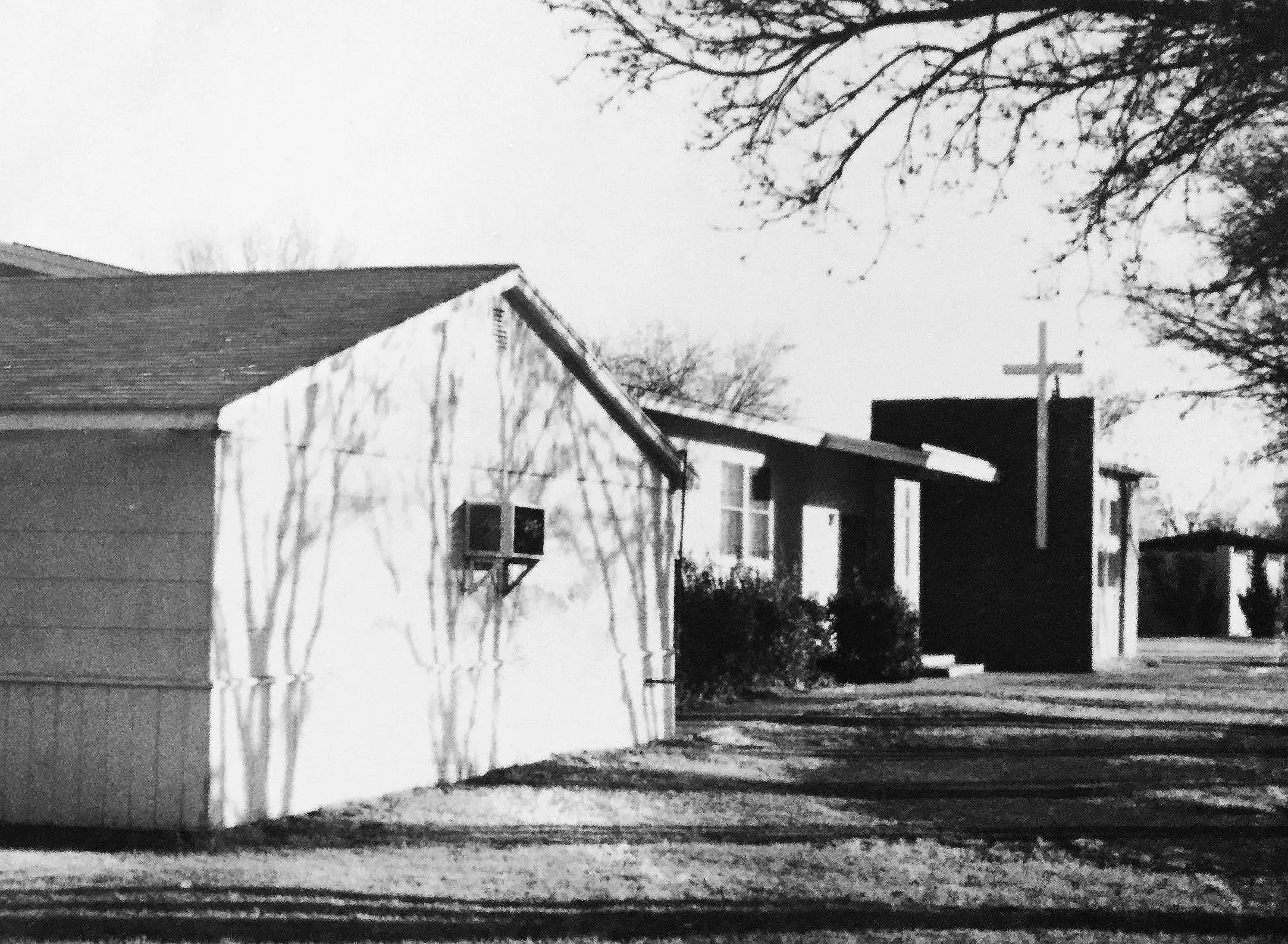
An early St. Christopher’s building.1954
On November 14, 1954, Bishop George Quarterman led a service for the Breaking of Ground for the new mission. The site – 42nd and Elgin – was sparsely settled. At one time, it had been part of a farm, and posts and wire remnants of a hog pen had to be dealt with before construction could begin.
Early 1955
The 2500 square foot building was completed and was dedicated on February 13, 1955, by the rector of St. Paul’s and his curate, the Rev. Paul Hebberger. In the weeks following the dedication the Revs. Canterbury and Hebberger alternated Sundays in holding services at the mission.
Late 1955
About 90 families from St. Paul’s agreed to move to the new mission, but in the first few months, some drifted away or returned to St. Paul’s. Sometime in the fall of 1955, what had been known as “St. Paul’s Parochial Mission” began to use the name “St. Christopher’s Mission Church.”
The naming committee submitted two choices: Holy Trinity and St. Christopher’s. St. Christopher’s was selected almost unanimously. Parish historian Ada Wre Foster noted: Legend states that Christopher was a saint who lived in the 3rd Century A.D. and died a martyr under the Roman emperor Decius. After his conversion to Christianity, he served God by ferrying travelers across a dangerous river on his back. Christian tradition has it that the Christ Child once appeared to him and asked to be carried to the opposite shore. For this, Christopher earned his name, which means “Christ Bearer.”
Early 1956
While membership waxed and waned, the work of creating a church family continued: a women’s guild (ECW) was formed, adult and children’s choirs were formed, vested and trained, a youth group (the Christ-bearers or CB’s) was organized, acolytes were incorporated into the services, and Sunday School classes were taught regularly. In February 1956, Bishop Quarterman approved St. Christopher’s becoming a district mission with support from the diocese, thus relieving St. Paul’s from much of its financial responsibility.
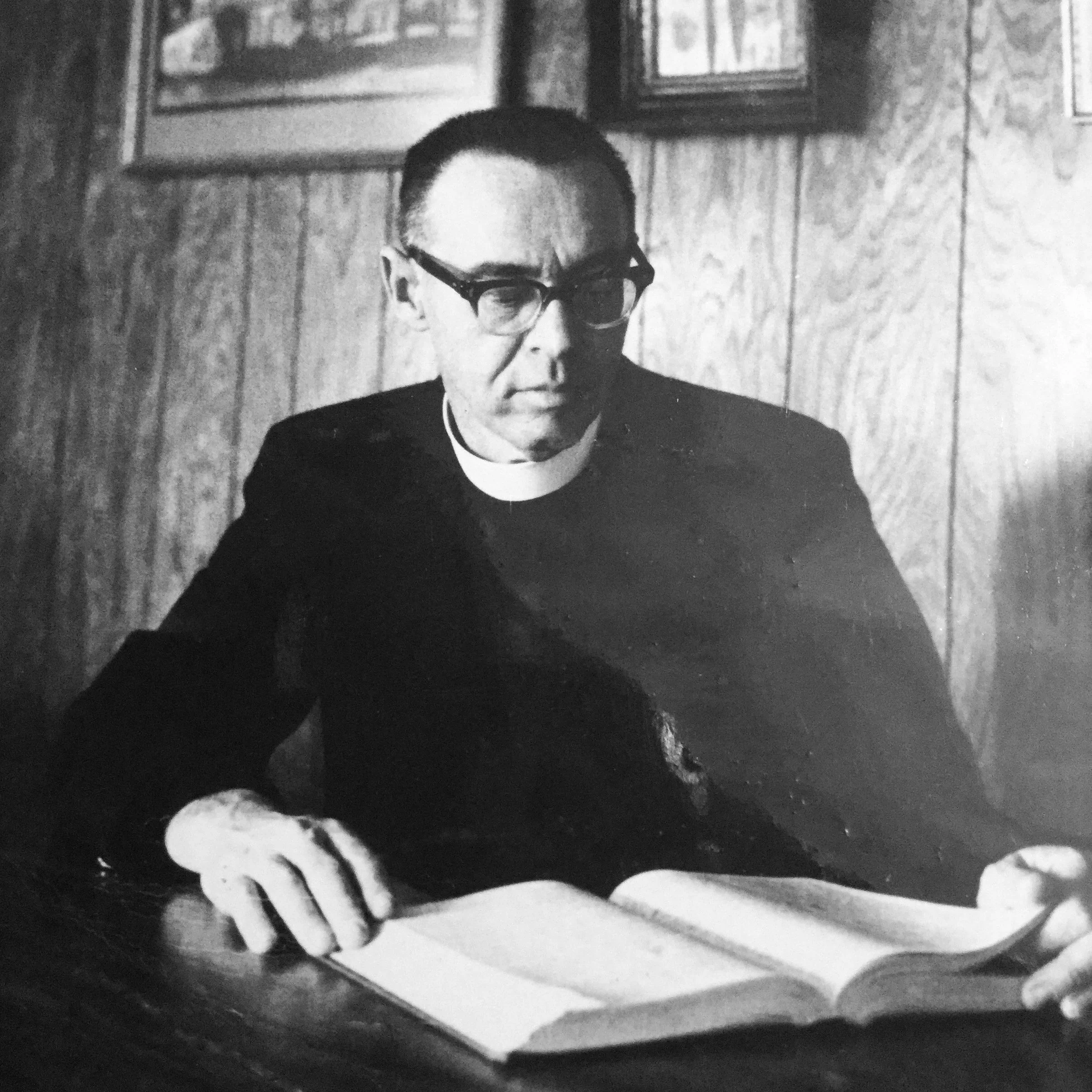
The Rev. Tom Miller, vicar of St. Christopher's from 1956–1968.Mid-Late 1956
St. Paul’s clergy continued to provide clerical services through Fr. Jaque Washington and his assistant, Fr. Allen Price. This continued until April 1956, when The Rev. Tom Miller was called to serve as vicar of St. Christopher’s. Fr. Miller “hit the ground running,” you might say.
Within a few weeks, a house had been purchased for a rectory, plans were approved for an educational wing to be added to the original structure, and Fr. Miller outlined plans to begin a school. The school opened with 20 paying pre-K and kindergarten students and two teachers in September 1956.
In August of 1956 (before school started), the first summer “Round-Up” program was held.
Children were organized in multi-age groups with older children helping younger ones, aided by adults, following a Western theme. This was an unusual practice, as everyone was accustomed to having the children separated into groups by age. “Round-Up” was a rousing success and continued—almost in its original format—into the early ’90s.
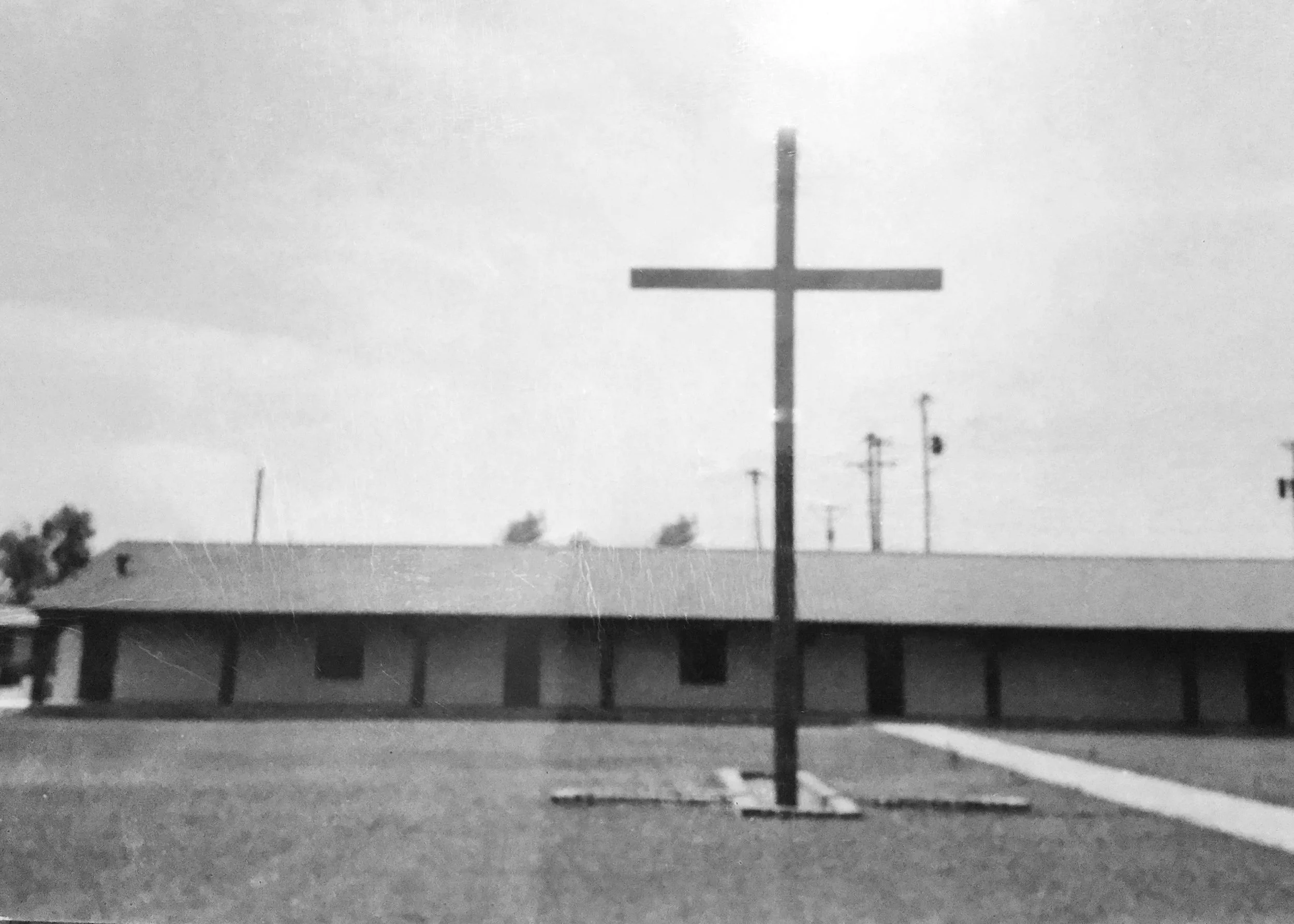
Early photograph of The Education Wing, St. Christopher's Episcopal Church of Lubbock.1957
Under Fr. Miller’s enthusiastic encouragement application was made in March 1957 to the bishop to become a self-supporting parish, and the petition was approved. For the next several years there was seldom a period of time when the church was not planning or erecting a building or raising money for that purpose. Members came from all over town. Growth in facilities and membership, both in the church and the school, continued for the next decade. The current church building was built in the late 1960’s.
1968—1976
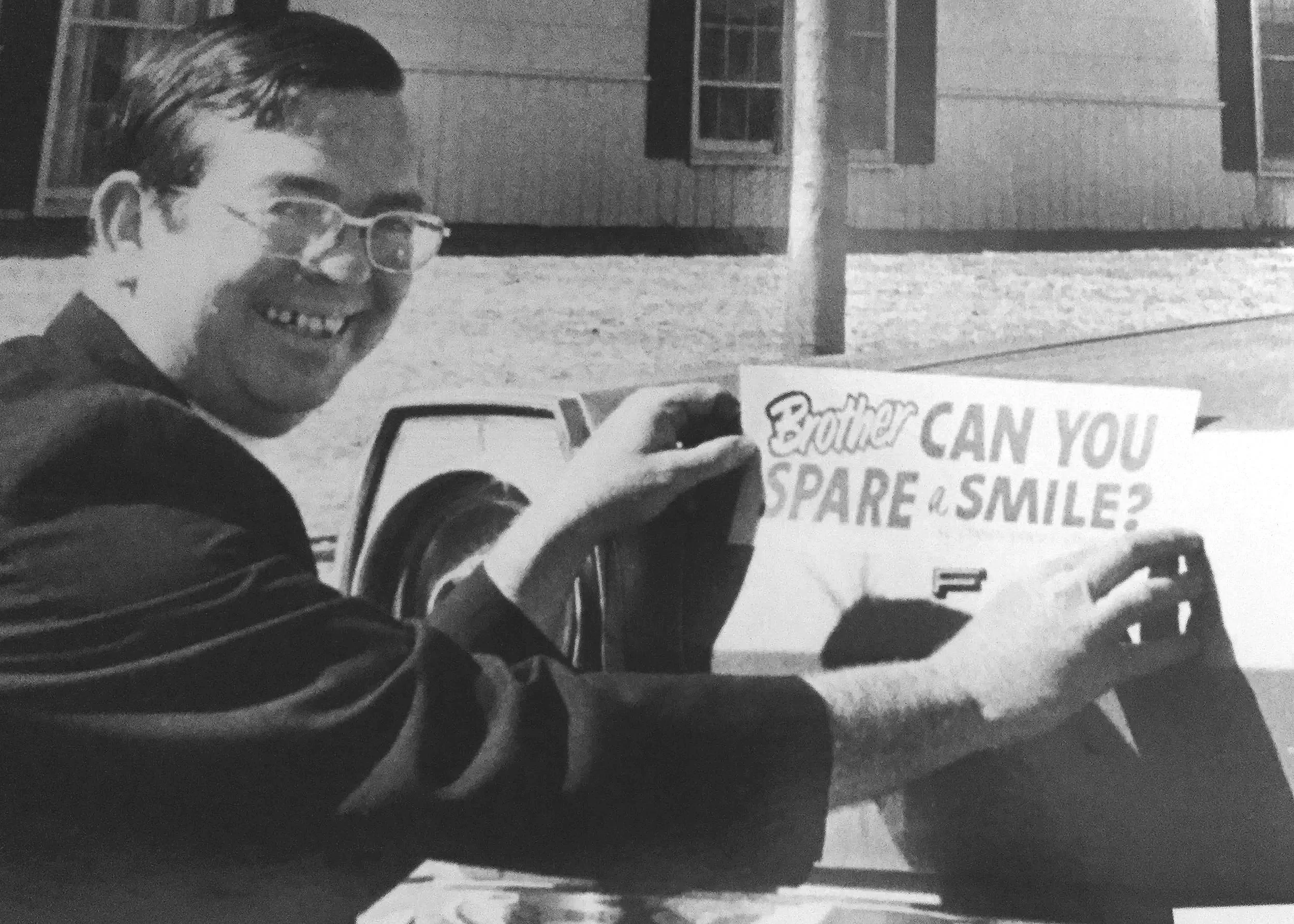
Fr. Miller resigned in 1968. In 1969, the Rev. Kenneth Clark became rector, serving until 1976. In 1976, Fr. Clark accepted a position at the Cathedral of St. John in Albuquerque as Canon for Education.
Rev. Kenneth Clark, rector from 1969–1976. He holds up a sign reading, "Brother CAN YOU SPARE a SMILE?"1979—2005
Fr. Clark was succeeded as rector by The Rev. Edward Abrahamson, who served until 1979. His successor was The Rev. James P. Haney IV, who served as rector of St. Christopher’s for 26 years, retiring in 2005. Serving with Jim as curate in the early 1980’s was The Rev. G. Wayne Smith (who later became bishop of the Diocese of Missouri). Later in the 1980’s, the Rev. Rick Ward joined the parish as curate. Rick’s focus in ministry at St. Christopher’s was the youth of the parish.
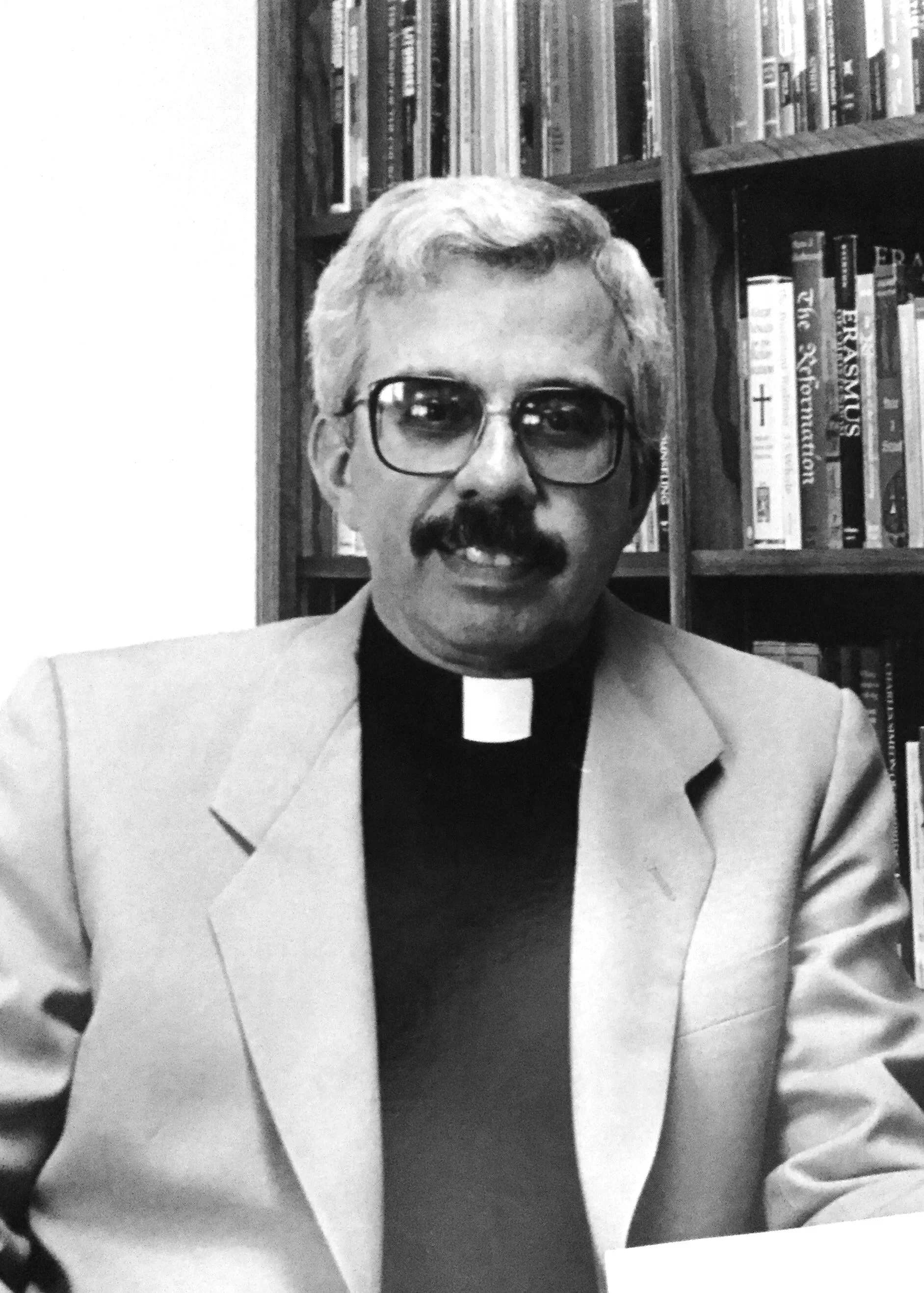
The Rev. James P. Haney IV, rector of St. Christopher's from 1979-2005.2008—2015
Following Fr. Haney’s retirement, The Rev. Edson Way was ordained and assumed the position of Rector in 2008. Edson served for six years, retiring in 2015. Both Fr. Haney and Fr. Way maintain their homes in Lubbock and serve at our altar or in our pulpit as needed or requested.
2016—2020
The Rev. Jennifer Holder served as St. Christopher’s rector from 2016 to April, 2020.
Mtr. Jennifer and her husband, Richard Fielder, remained as members of St. Christopher’s until Richard’s death, when Mtr. Jennifer moved out of state. In May 2020, Fr. Michael Bernard assumed the position of Interim Rector of St. Christopher’s. He served until a new rector was chosen.
2021
The Rev. Rachel Petty was called to be vicar of St. Christopher’s in 2021. She served for 28 years as an adult probation officer. She retired from her position as Director of adult probation for four rural counties in May 2021. Mtr. Rachel was ordained to the Transitional Deaconate that same month. She was appointed Vicar of St. Christopher’s beginning in June of 2021 and became Rector following her ordination to the priesthood on December 16, 2021.
Loving, liberating, life-giving:
the Jesus Movement.
The History of the Episcopal Church begins in the Church of England. The beginnings of the Church of England date to at least the second century, when merchants and other travelers first brought Christianity to England. It is customary to regard St. Augustine of Canterbury’s mission to England in 597 as marking the formal beginning of the church under papal authority, as it was to be throughout the Middle Ages.
In its modern form, the church dates from the English Reformation of the 16th century, when royal supremacy was established, and the authority of the papacy was repudiated. With the advent of British colonization, the Church of England was established on every continent. In time, these churches gained their independence but retained connections with the mother church in the Anglican Communion. For more information, visit the Episcopal Church website here.
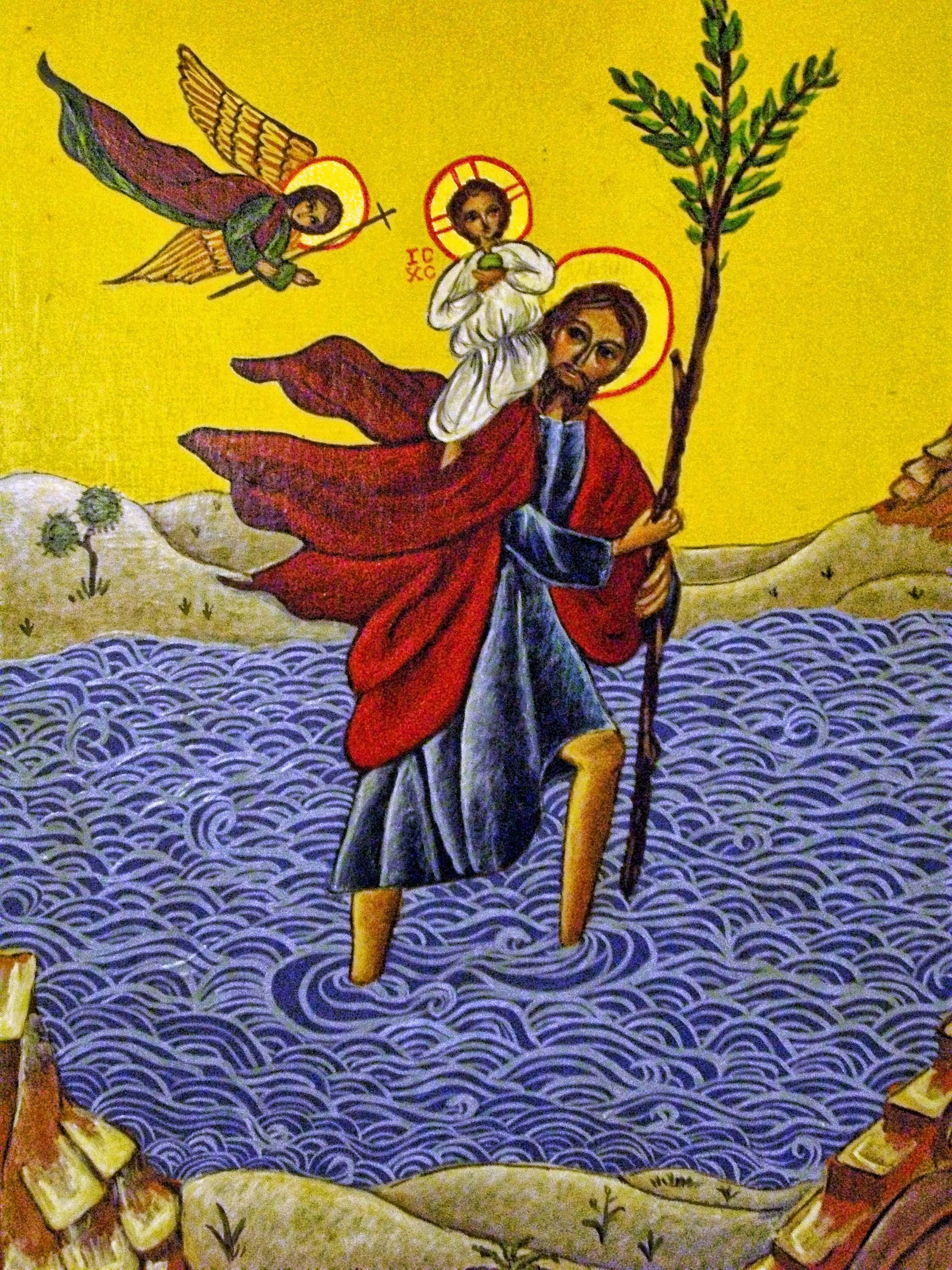
St.Christopher
icon written by our own talented parishioner, Suzanne Aker.
Our current logo, designed by Marcello Burdis, is a vectorized interpretation of this icon.